A robot that pays for itself, so why won't the HSE buy it?
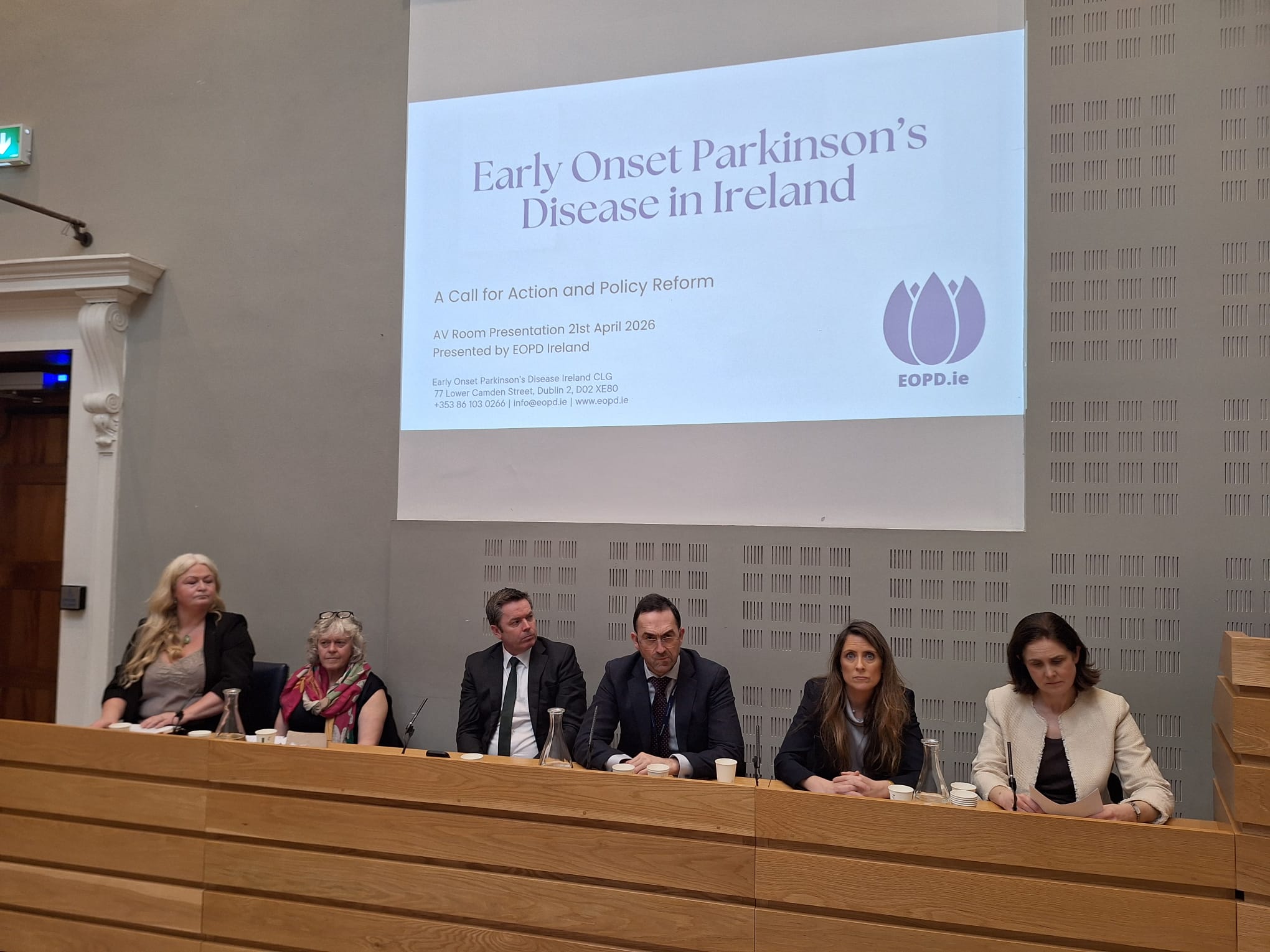
Today I was invited to attend a presentation in the AV Room at Leinster House by Early Onset Parkinson's Ireland, who were presenting alongside top neurosurgeons from Beaumont Hospital. It was a privilege to be in the room, and it was also a deeply frustrating one because what I heard was a story of a system failing people through a lack of basic forward thinking.
I have written before about the work of Early Onset Parkinson's Ireland and their campaign to secure a new deep brain stimulation robot for Beaumont Hospital. I was glad to support that campaign then. Today, I am sorry to report that nothing has changed. There has been no movement on this issue, and the more I learn about it, the more indefensible that appears.
Deep brain stimulation is life-changing, and we are rationing it
Deep brain stimulation surgery can be transformative for people living with early onset Parkinson's. For many, it dramatically reduces symptoms and restores quality of life in a way that medication alone cannot. The demand for this surgery is growing, in line with rising Parkinson's diagnoses nationally. And yet access to it in Ireland is severely limited.
Beaumont Hospital currently has a deep brain stimulation robot, but it takes 6.5 hours to operate. That means one surgery per day. The new robot would cut that time in half, enabling the surgeon, who is willing and ready to do this, to perform two surgeries per day instead of one. That is a straightforward doubling of capacity from a single piece of equipment.
The HSE is currently spending €2 million a year sending patients to the UK for this surgery. The robot costs €1 million. The maths is not complicated.
Beaumont had €8 million to spend, and chose not to buy the robot
Recently, Beaumont Hospital received a budget of €8 million to replace equipment. The deep brain stimulation robot was not selected. The rationale given was that the current robot still works, so it was not prioritised. Other equipment that had reached the end of its life was replaced instead.
There is something troubling in that logic beyond the robot itself. A health system that only replaces equipment at crisis point, when something is on its last legs is not managing its infrastructure. It is lurching from emergency to emergency. That approach costs more in the long run, and it puts patients at risk in the meantime.
But on the specific question of the robot: the fact that the current one still functions is not a reason to keep it. The new robot would not replace a broken machine. It would unlock capacity that does not currently exist, reduce a two-year waiting list, keep patients in Ireland rather than flying them to the UK, and return those patients to better health and reduced reliance on other services. That is not a luxury upgrade. That is a sound investment.
This is what the absence of cost-benefit analysis looks like
What strikes me most about this situation is how short-sighted it is. The €1 million cost of the robot is treated as an expense. But spending €2 million a year on UK referrals, with no end date and a growing patient population, apparently does not prompt the same scrutiny. The costs of inaction are invisible in the budget. The cost of action is not.
Proper cost-benefit analysis would capture not just the direct surgical costs, but the downstream savings: fewer overseas referrals, better patient outcomes, reduced dependency on other health and social care services as symptoms are better managed. When you account for all of that, the robot does not just pay for itself, it does so quickly, and repeatedly.
I want to commend Early Onset Parkinson's Ireland for their continued advocacy on this issue, and the neurosurgeons at Beaumont who are making the case with clarity and evidence. They should not have to keep making this argument. The case has been made. What is needed now is a decision, and the right one is not difficult to identify.
I will continue to raise this at every opportunity, and I would encourage anyone who feels strongly about it to contact their representatives and ask why this robot has not been funded.
Thank you for subscribing!
Have a great day!