Jigsaw, youth mental health, and the supports holding our health system together
At our most recent Bray MD council meeting, we received a presentation from Jigsaw, the mental health service for young people. It was a genuinely thought-provoking session, and one that I found particularly relevant given my own work as a speech and language therapist.
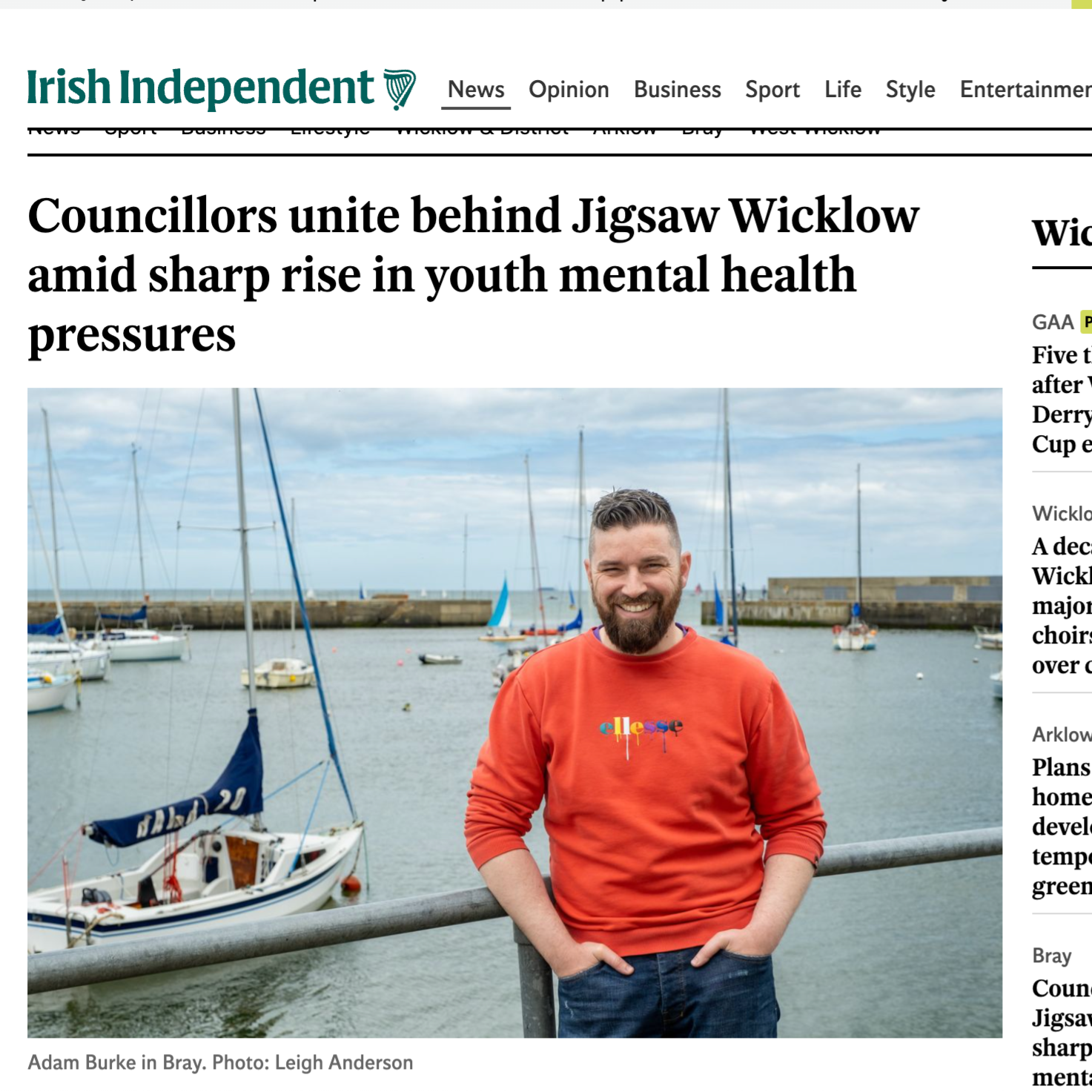
Adam Burke spoke about the community and outreach projects Jigsaw runs, giving us a real sense of the breadth of work happening beyond the clinical setting. We also received a presentation on the clinical supports Jigsaw provides, and we had the privilege of meeting Ceoladh Fenlon, a Jigsaw youth ambassador, a reminder of the real young people at the heart of this work.
Perhaps most striking was hearing about the unprecedented demand for mental health services that Jigsaw is seeing in our area. This is not a surprise to those of us working in related fields, but hearing it directly was a sobering moment for the room.
The crossover between speech and language therapy and mental health
As a speech and language therapist, I work with many of the same young people who attend Jigsaw. There is significant crossover in our client groups, and I see first-hand the challenges they face navigating a system that does not always serve them well.
One area I raised at the meeting is something I feel strongly about: the difficulty autistic young people face in accessing Child and Adolescent Mental Health Services (CAMHS). Too often, mental health difficulties in autistic people are attributed solely to their autism, as if the two are inseparable, and as if autism explains away everything else. This is simply not the case. Autistic people can experience anxiety, depression, and other mental health conditions that are distinct from their neurodivergence, and those conditions are no less valid and no less deserving of support.
Jigsaw are doing something really important in this space. By providing accessible mental health supports without the gatekeeping barriers that exist elsewhere in the system, they give neurodivergent young people somewhere to turn when other doors are closed.
A high-quality schools programme
I also took the opportunity to commend Jigsaw on their schools programme. The quality of the work they bring into educational settings is genuinely impressive, and it stands in sharp contrast to a growing concern I have about this space.
Increasingly, schools are receiving mental health and wellness training from individuals who do not have the clinical background to deliver it safely. While the intention behind this work is often good, the reality is that sensitive topics, particularly anything touching on suicide and self-harm, require careful, evidence-based handling. When these subjects are not approached properly, there is a real risk of harm through what is known as suicide contagion. Not everyone offering this kind of training in schools is equipped to manage what can arise from it, and that is a serious concern that our council and the wider health system needs to take seriously.
Organisations like Jigsaw are propping up our health system
Finally, I want to be direct about something that often goes unsaid in these conversations. The HSE would be on its knees without organisations like Jigsaw. The statutory health services do not fully appreciate, or at least do not adequately acknowledge, the extent to which community and voluntary organisations are filling the gaps they leave behind.
Jigsaw is not a luxury add-on to the mental health system. It is a core part of what keeps that system functioning for young people. That deserves recognition, proper resourcing, and a genuine partnership rather than an afterthought.
I look forward to continuing to advocate for young people's mental health in Bray and across the county, and I thank Jigsaw for the work they do every single day.
Thank you for subscribing!
Have a great day!