When Delay Means Decline: The Cost of Waiting for DBS Surgery
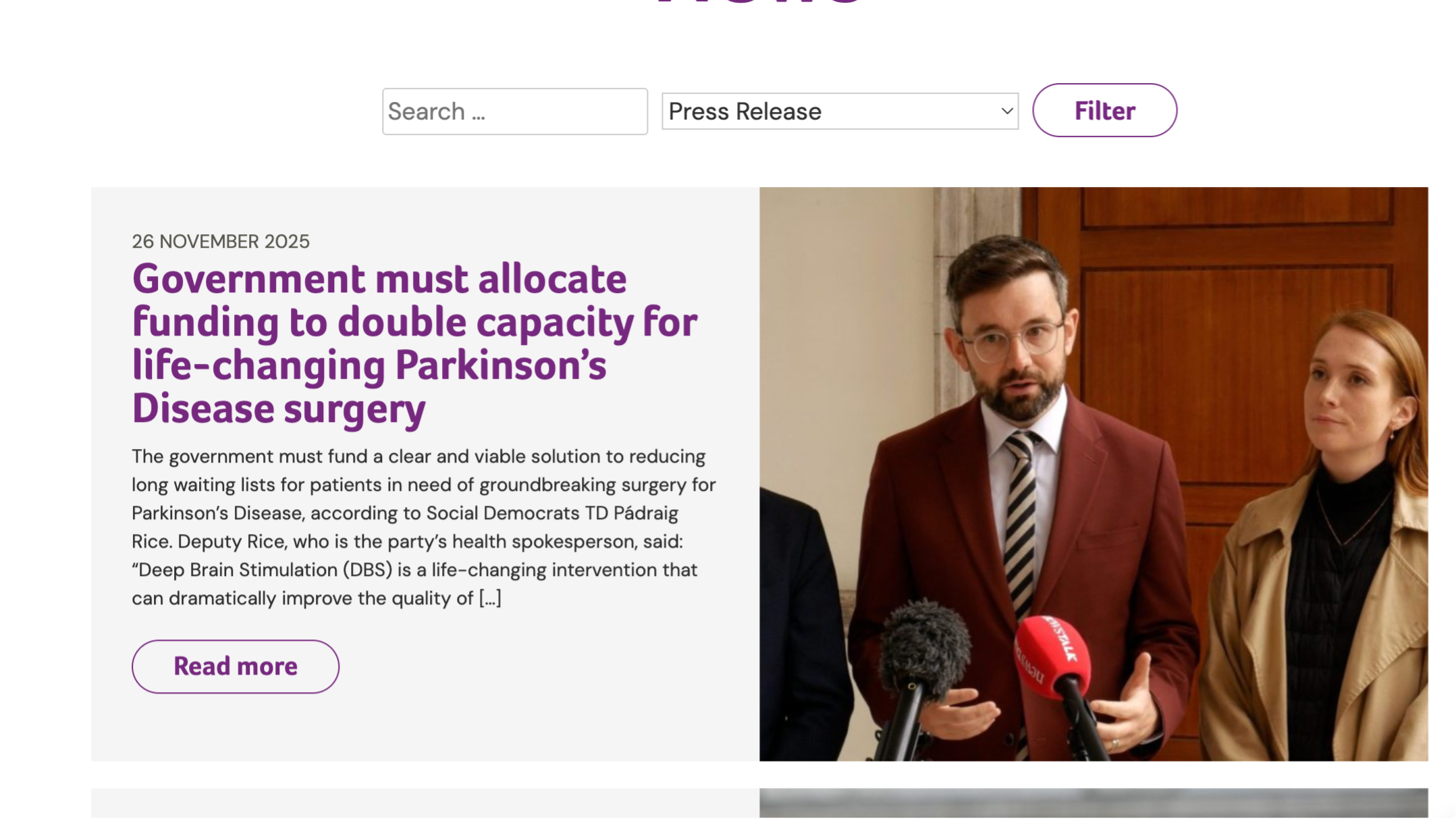
Parkinson’s patients across Ireland are facing dangerously long waiting times for Deep Brain Stimulation (DBS) surgery, a proven and life-changing treatment that can significantly improve quality of life when delivered early. With waiting lists stretching to 16 months or more, many patients are deteriorating beyond the point where the procedure can provide meaningful benefit.
DBS can reduce tremors, improve mobility, and help people regain independence, yet access to this vital surgery is being limited by systemic underinvestment and capacity constraints. Ireland currently has only one neurosurgeon performing DBS procedures, a reality that has led to significant reliance on outsourcing surgeries to the UK. Between 2022 and 2023 alone, more than €2 million was spent sending patients abroad, placing additional financial, physical, and emotional strain on individuals and their families.
While this outsourcing may appear to offer a short-term solution, it ultimately diverts critical funding away from strengthening Ireland’s own healthcare system. A clear and viable alternative already exists in the form of an updated neurosurgical robot, which would significantly increase surgical capacity, reduce theatre time, and ensure patients receive treatment while it is still effective.
This issue has now been formally raised at political level. I brought this matter to my party for support, resulting in a press release being issued and two parliamentary questions submitted to the government, seeking clarity and urgent action on funding and capacity for DBS surgery. This step reflects growing political pressure to move beyond acknowledgment and toward concrete action.
Trials of this equipment at Beaumont and the Mater Hospitals are nearing completion, yet there remains no firm commitment to fund its rollout. Instead, decisions have been deferred to the 2026 National Service Plan, leaving current patients in a state of uncertainty and continued decline.
The consequences of delay extend beyond medical outcomes. Families are left watching loved ones lose independence and dignity, knowing that timely intervention could change the course of the disease. Volunteer-led organisations advocating for people with Parkinson’s should not have to fight for access to treatments that already exist within the Irish healthcare system.
This issue represents more than a budgeting decision. It is a test of national responsibility, healthcare planning, and compassion. Investing in modern neurosurgical equipment would not only reduce waiting lists but also signal a commitment to providing effective, equitable care for those living with chronic neurological conditions.
The solution is available, the evidence is clear, and the need is urgent. What remains is decisive action to ensure no patient is left behind because of avoidable delay.
Thank you for subscribing!
Have a great day!