Why Bray Needs a Town Team
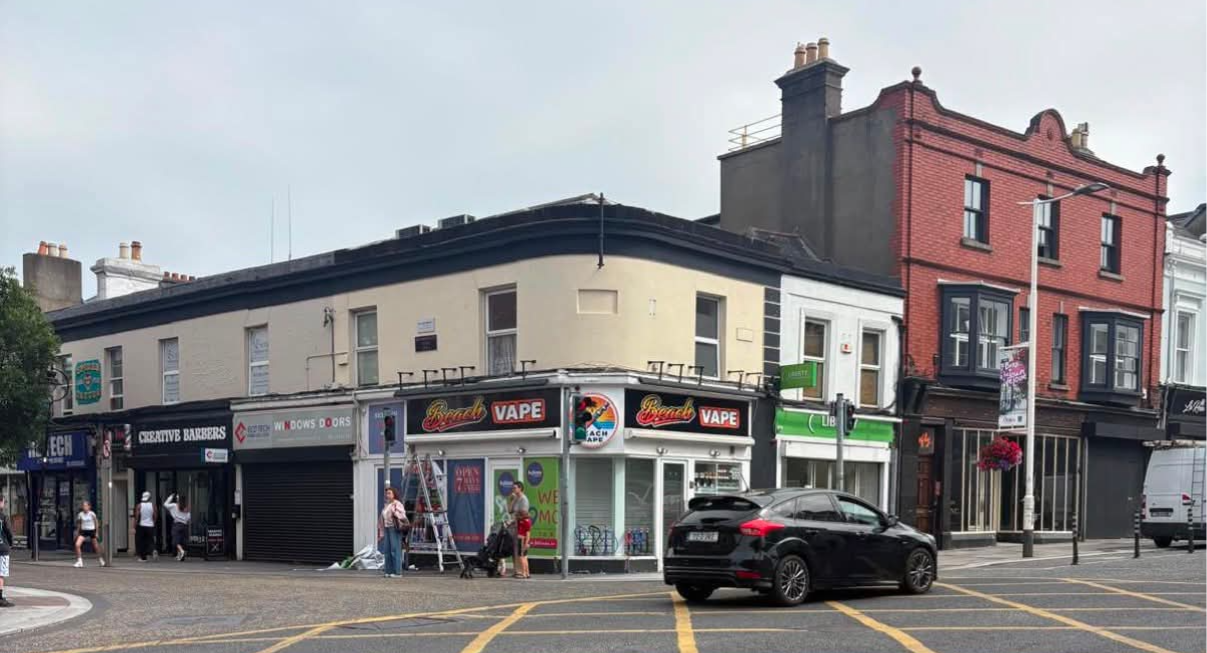
Over the last few weeks, I've spent a lot of time thinking and talking about Bray Main Street. I spoke to the Irish Times for their Derelict Ireland series about vacancy in the town, and I followed that up on my own blog with a closer look at what's actually on Bray Main Street.
We don't have one problem on Bray Main Street, we have several, and no single person, not the council, not landlords, not traders, not central government, can fix them alone.
That's exactly the kind of problem a town team exists to solve.
What the numbers actually tell us
When I counted every retail and service unit across Main Street, Quinsborough Road, Florence Road, the Arcade and the shopping centre, the single biggest category wasn't a shop type at all. It was empty units, 32 of them. Behind that, the businesses that dominate the units that are occupied are hairdressers, cafes and charity shops, the kinds of businesses that survive because they can't be replicated online. Everything else, the independent retail, the things that would actually give people a reason to spend an afternoon in the town rather than just passing through it, is being squeezed out.
As I said to the Irish Times, I think Bray has a vacancy problem more than a dereliction problem, and there's a difference. A derelict building is a legal category with a high bar to meet. A vacant unit is just a unit sitting empty, sometimes for years, while a landlord waits for the right tenant or the right price. We've already moved to reduce the rates relief incentive for leaving a premises vacant, from 60 per cent down to 20 per cent in the first county budget. But rates policy alone isn't going to fix a town centre. It can nudge behaviour at the margins; it can't decide what Bray becomes.
Why this isn't a job for the council alone
As a councillor, my powers over what actually moves into a vacant unit are extremely limited. I can't stop a landlord renting to a tenant I'd rather not see on Main Street. I have no vetting role over who takes a lease. Planning and licensing give me narrow levers, signage rules, HSE licensing questions I can raise, but nothing close to control over the overall retail mix.
And that's not really a gap in my powers specifically. It's a structural gap. No single body, elected or otherwise, has the authority or the information to single-handedly decide what a town centre needs and make it happen. The council controls some things: rates, planning, public realm, parking. Landlords control what gets let and to whom. Traders know what's working and what isn't, day to day, in a way no one at a desk in County Buildings ever will. Community groups and residents know what's missing, what they'd actually use, what would bring them into town rather than into the car and out to a retail park.
A town team is the structure that gets all of those voices around the same table, working from the same evidence, toward the same plan, instead of everyone pulling in a different direction and blaming each other when nothing changes.
It's not a new idea, and it's already working elsewhere in Ireland
Town teams are a recognised model that's already up and running in towns across the country, and it's been recognised at a European level as good practice. Interreg Europe highlighted Ireland's town team approach as an example other EU regions could learn from, describing it as a way of bringing local authorities, businesses, community groups and citizens together, under local authority oversight, to co-develop solutions across economic, social and environmental priorities.
Roscommon was the first county to pilot the approach before it was rolled out nationwide, and the results are concrete: a life sciences innovation hub in Monksland, a food incubation hub in Castlerea, the National Famine Museum in Strokestown, town centre incubation units in Boyle, and plans for a creative sector hub in Ballaghaderreen. None of those happened by accident. They happened because a structured team, with local authority backing, turned local priorities into funded projects.
Town teams have dedicated funding to draw on, this isn't just talk
Town teams in Ireland aren't just a talking shop with no resources behind them. They exist specifically so that towns can access funding streams that aren't available to individuals or ad hoc groups. Under the Government's Town Centre First policy, Town Teams work with a Town Regeneration Officer to develop a Town Centre First Plan, and that plan becomes the basis for drawing down funding from sources including:
- The Urban Regeneration and Development Fund (URDF)
- The Rural Regeneration and Development Fund (RRDF)
- The Croí Cónaithe (Towns) Fund
- The Town and Village Renewal Scheme
- The Active Travel Fund
- The Historic Towns Initiative, run jointly with the Heritage Council, which specifically funds projects tackling dereliction and heritage-led regeneration
There's also a dedicated Town Team Support Fund, which has provided up to €10,000 per town specifically to help establish or develop a town team where one doesn't already exist, on top of separate funding rounds worth hundreds of thousands of euro to help towns develop their Town Centre First Plans in the first place.
In other words, the money is there, and it's been allocated at national level precisely to support this kind of local, collaborative work. What Bray doesn't have yet is the team in place to go and apply for it. Every euro of that funding that goes to another town instead of Bray is an opportunity cost we're carrying for not having this structure up and running.
What a town team actually does
Town teams have worked in towns across Ireland and the UK precisely because they're not another layer of bureaucracy, they're a coordination mechanism with specific funding attached. Typically that means:
- A shared evidence base. The kind of unit-by-unit audit I did for my blog post shouldn't be a one-off exercise by a local councillor. It should be a standing piece of work a town team maintains and updates, so decisions are made on facts about what's actually there, not impressions.
- A voice for traders and landlords together. Landlords are too often treated as the villains of the vacancy story, but many are simply waiting, sometimes reasonably, sometimes not, for the right tenant. A town team can open a direct conversation about what "meanwhile use" or short-term lets could look like, rather than leaving units empty by default.
- A pipeline for meanwhile use and pop-ups. I've written before about the idea of leasing vacant premises at a peppercorn rent for pop-up shops or community and art space, on the understanding the unit reverts to retail once a permanent tenant is found. That kind of arrangement needs someone actively brokering it. A town team is that someone.
- Real input into the Local Area Plan. Wicklow is due to begin work on an updated Bray Local Area Plan, and I intend to push for stronger town-centre and shopfront guidance as part of that process. That process will be far stronger if it's informed by a town team that has already done the work of asking traders, landlords and residents what they actually want Main Street to become, rather than a small number of submissions arriving in isolation.
- A single point of contact for initiatives like the above-the-shop scheme. Turning vacant upper floors into housing is a genuinely good idea, but it needs someone helping landlords navigate it, unit by unit. That's a natural role for a town team.
The question I keep coming back to
People have views, strong ones, about what would make them choose Bray over Greystones, over Dún Laoghaire, over the retail park. What's been missing isn't opinion. It's a structure to turn that opinion into a plan, and the plan into action.
That's what a town team gives us: not a talking shop, but a standing partnership between the council, traders, landlords and residents, with a shared evidence base and a shared mandate to actually do something about the 32 empty units on our main streets, rather than watching them fill, one by one, with whatever's willing to take the lease.
I'll be raising this formally with the council in the coming weeks. If you're a trader, a landlord, or just someone who cares about what Bray looks like in five years, I'd like to hear from you. Get in touch, and let's build this properly.
Thank you for subscribing!
Have a great day!